Dashboard Header Anatomy

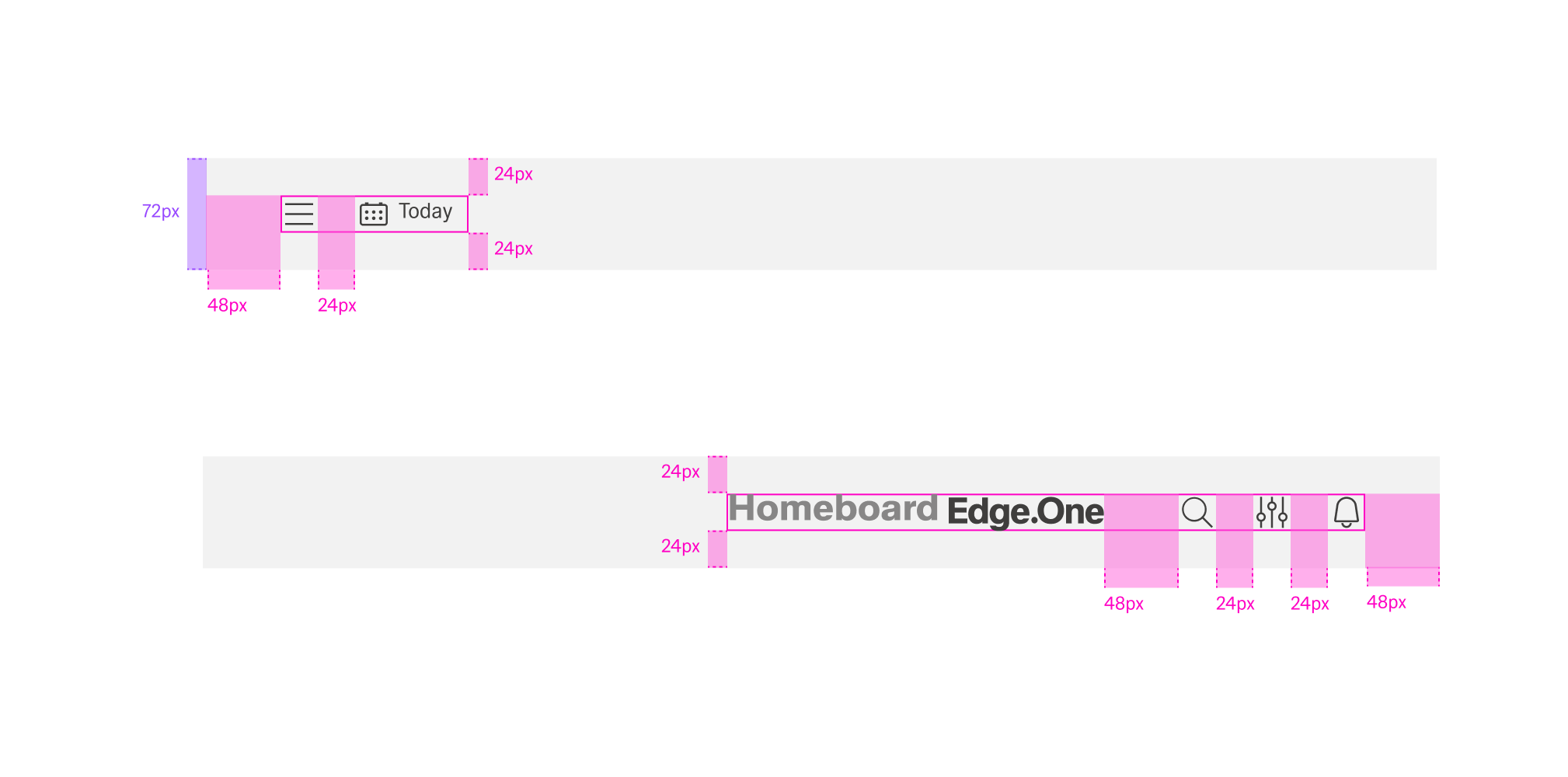
01 – Hamburger menu The hamburger icon is used to open application navigation such as the left panel.
02 – Position action bar This action bar is intended for datepicker and breadcrump only.
Content of this action bar depends on the content.
03 – Dashboard title The header name should be the name of the parent domain and be as brief as possible
while giving the user a sense of place.
04 – Product logo For Edge.One products, the header name is always preceded by “Edge.One”
05 – Header action bar These utilities are reserved for universal, system-level functions such as profile, search, notifications, and similar functions. Not every product on a system is required to show the same utilities, but it is recommended for a better cross-product user experience.
Dashboard Header Alignment
Dashboard Header Action bar
Die Action bar besteht innerhalb der globalen Navigation immer aus den gleichen Actions.
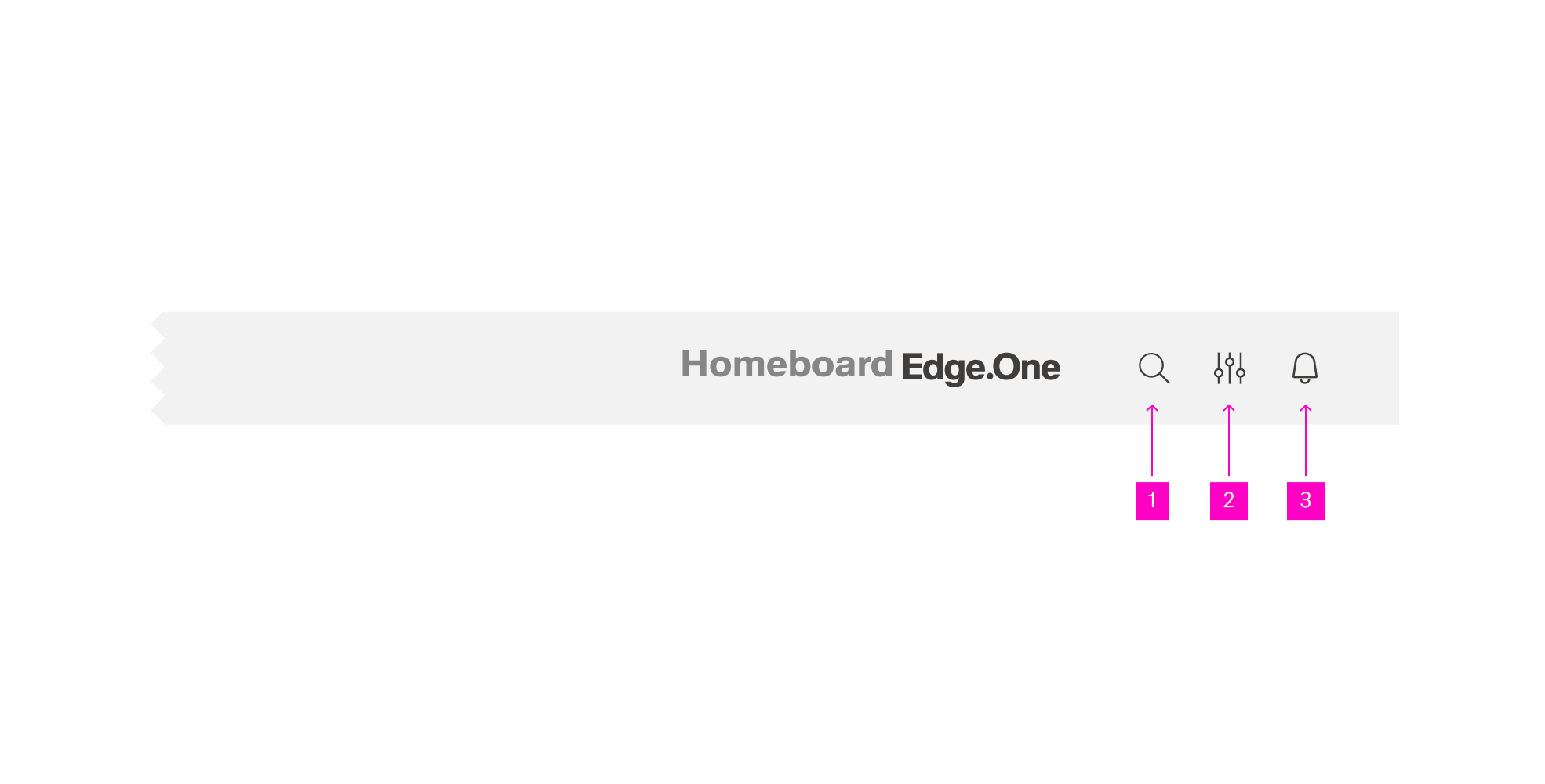
01 – Global Search Die meisten Suchvorgänge beginnen mit einer breiten Suche, deren Umfang sich mit Hilfe von Filtern einschränkt lässt.
02 – Profile and System Settings Die Einstellungenpunkte sind in einer Overflow Liste aufgeführt. Die Inhalte können sich von User zu User unterscheiden
03 – Notifications currently not possible to describe exactly
Navigation Panel Anatomy
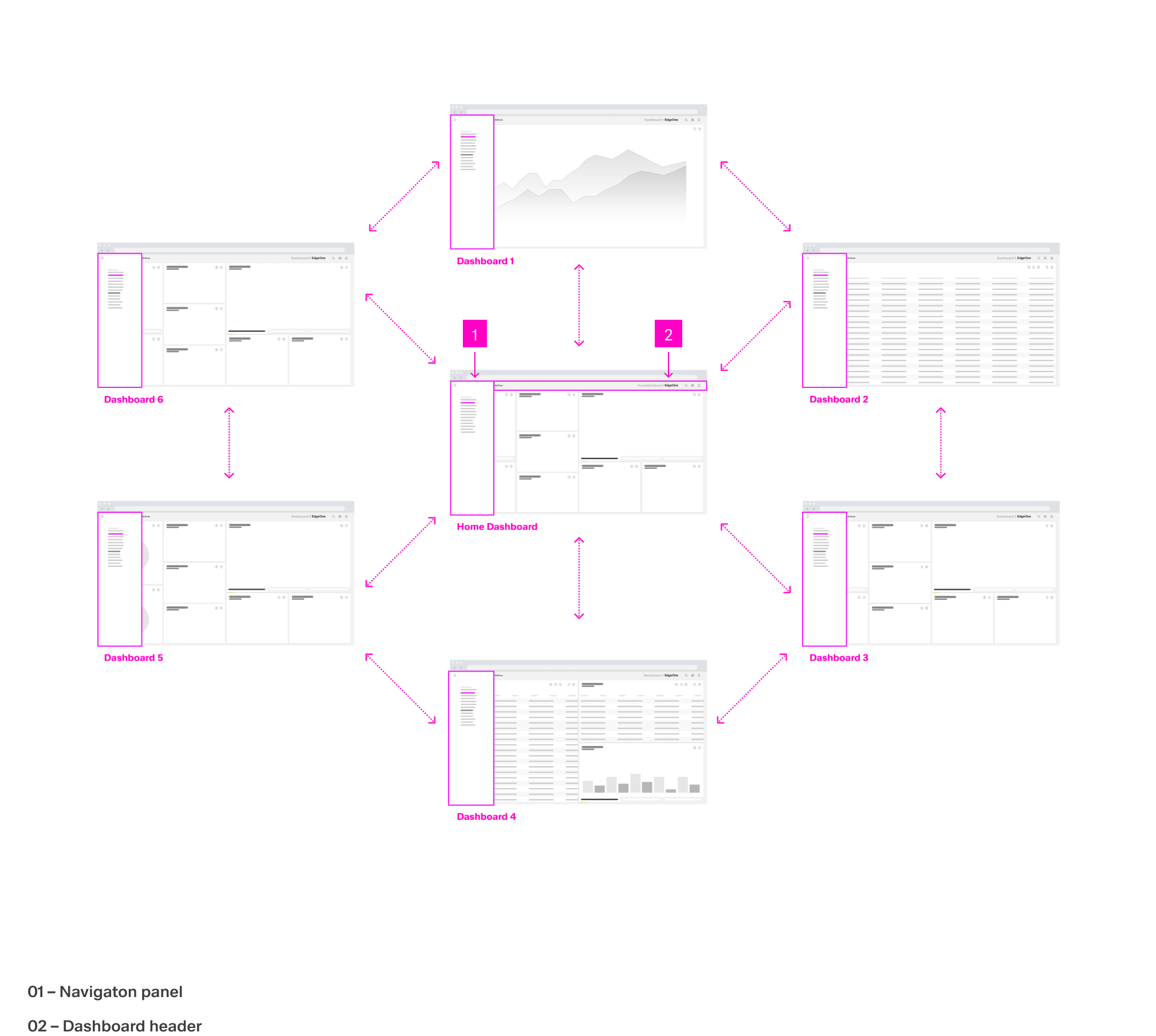
The navigation panel must always be placed on the left side of the dashboard and always consists of the same primary asset sets (1,2,3,6). The number of dashboard groups may vary. The dashboard groups may consist of simple sub menus and sub menu groups. Sub menu groups are always recognizable by the Expand/Collapse icon.
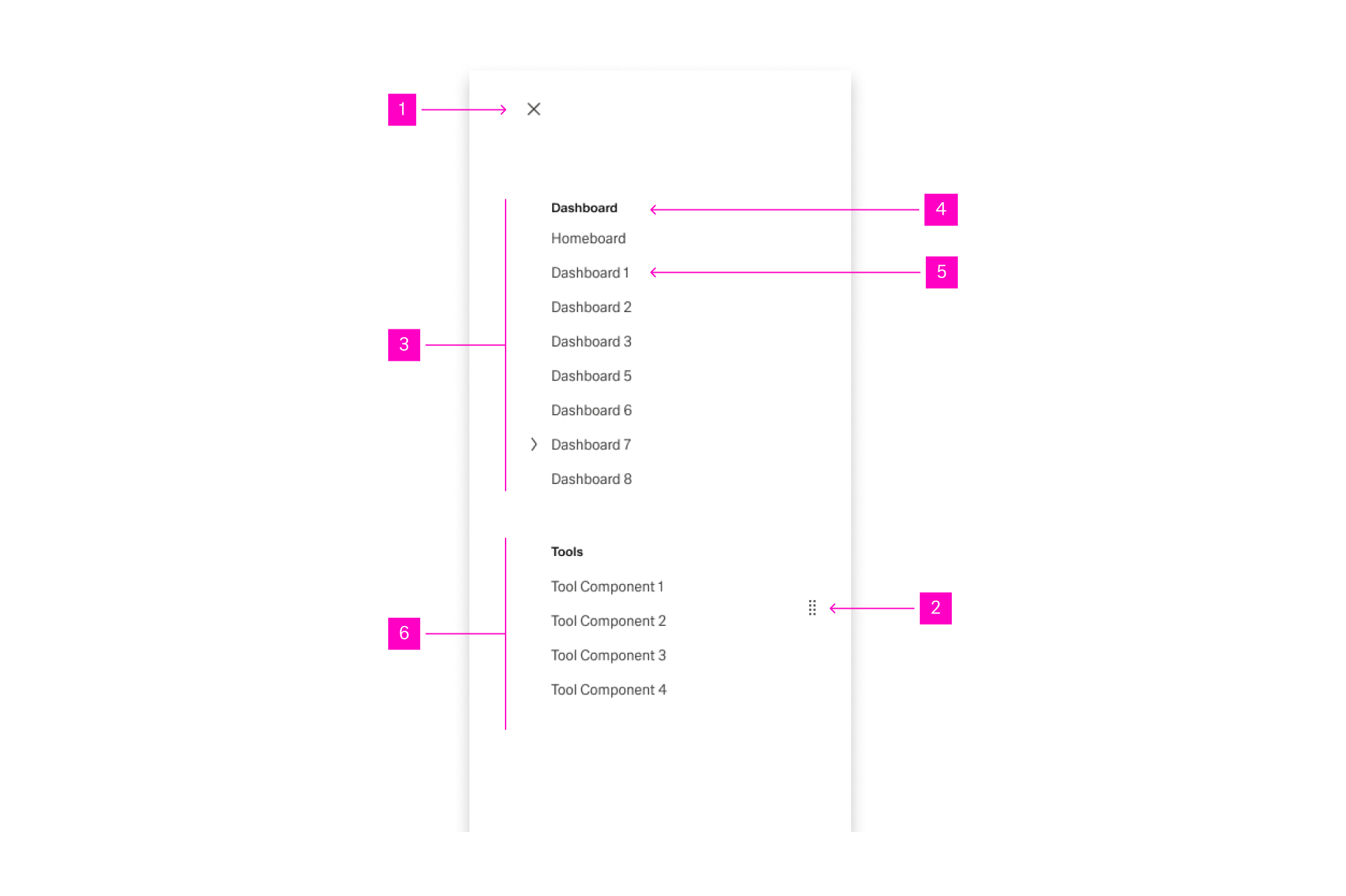
01 – Close Icon for the closeing of the navigation panel.
02 – Resize icon Icon for the individual sliding of the navigation panel.
03 – Dashboard group Group of sub-menus form a dashboard group.
04 – Dashboard group overline Each dashboard group must always be titled by an overline.
05 – Sub-menu Basic link element for the menu.
06 – Tool group tools groups contain sub-menus that link to different tools or services. the number of tools links may vary from user to user.
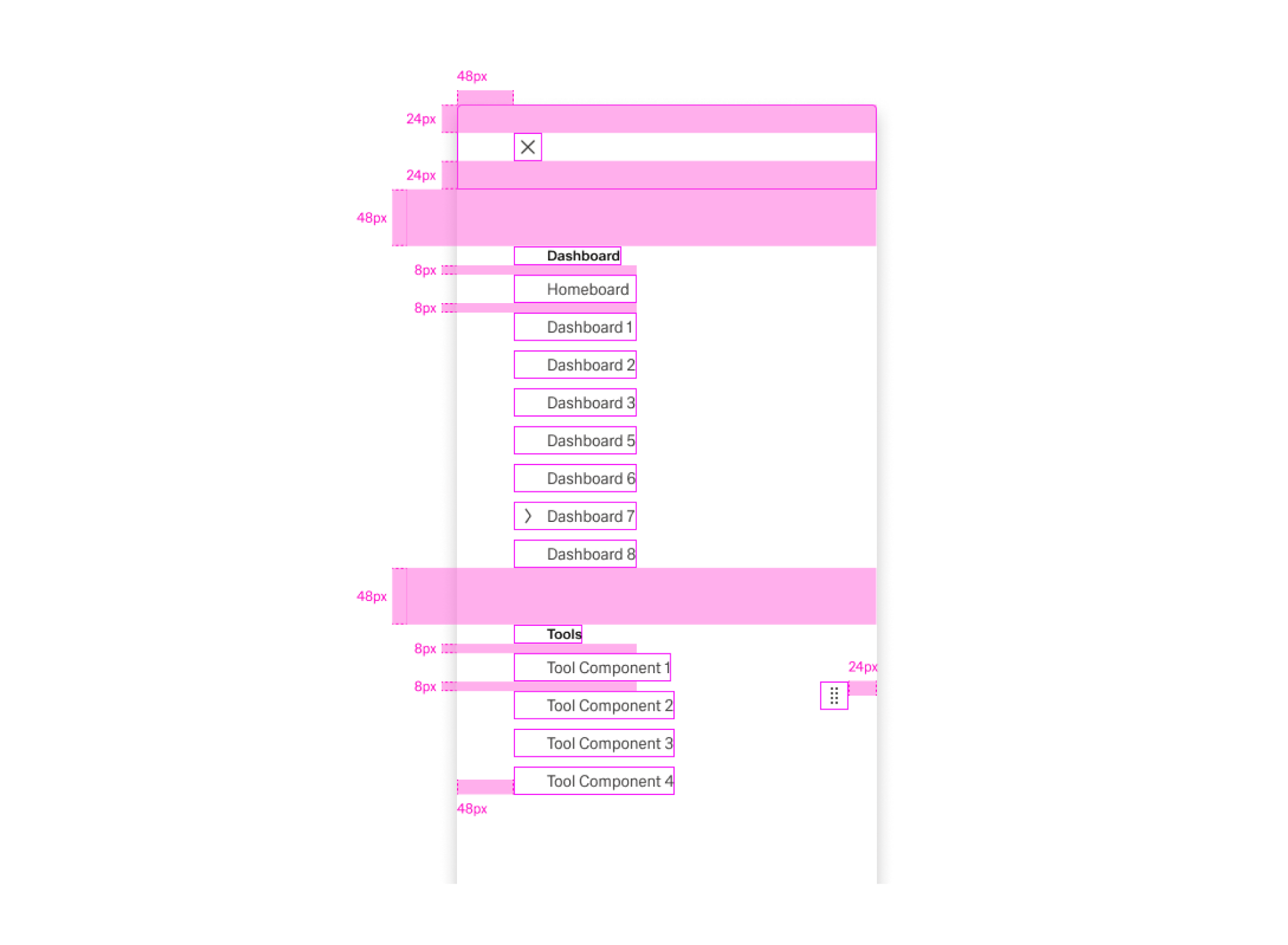
Navigation Panel Alignment
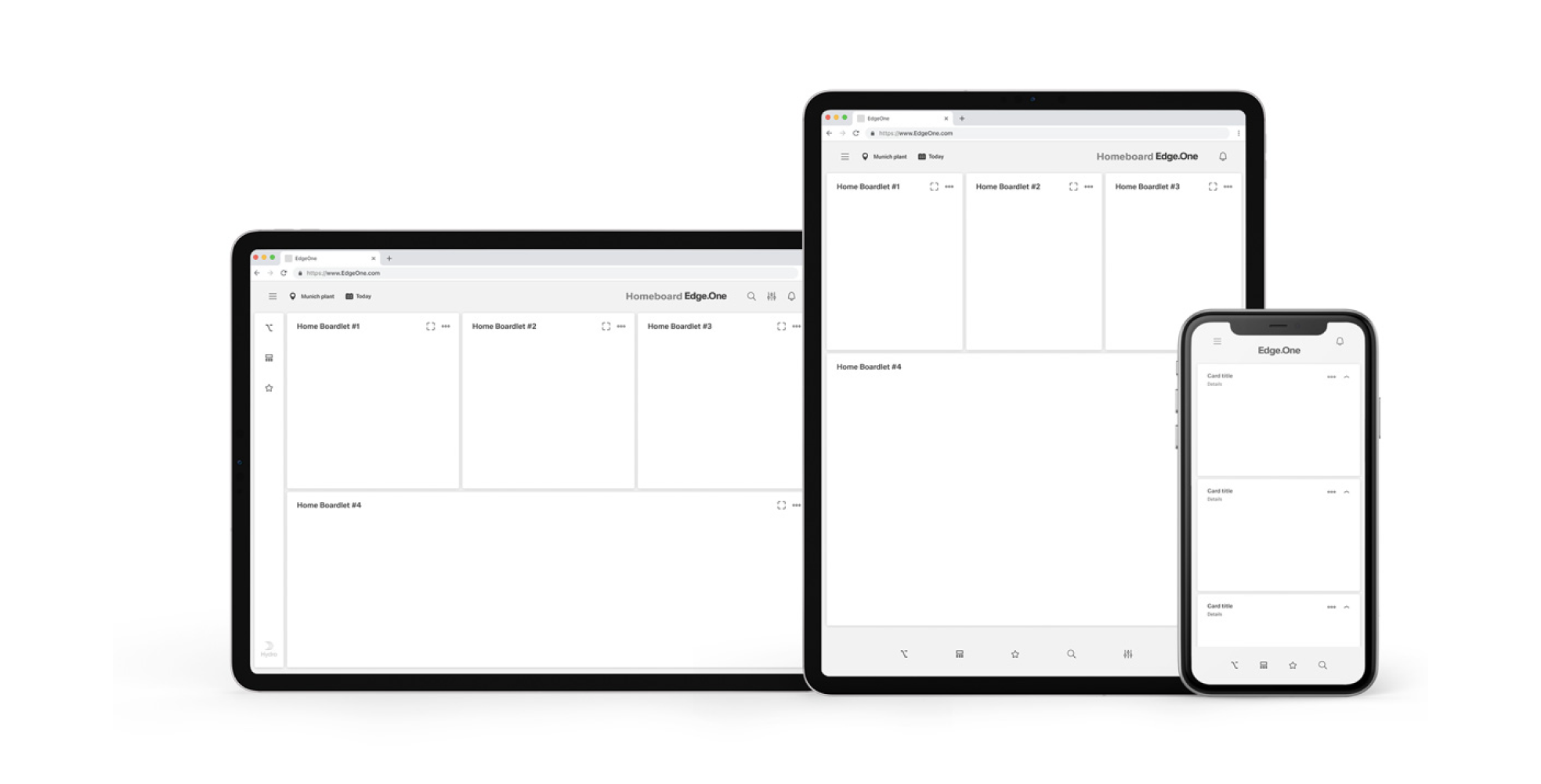
Responsive behavior
The header always remains the same in its position and function. In all horizontal representations of the header, the position and number of contents are always the same. In all vertical representations of the header, the header's position remains the same, but content may be moved from the global navigation to the local navigation.
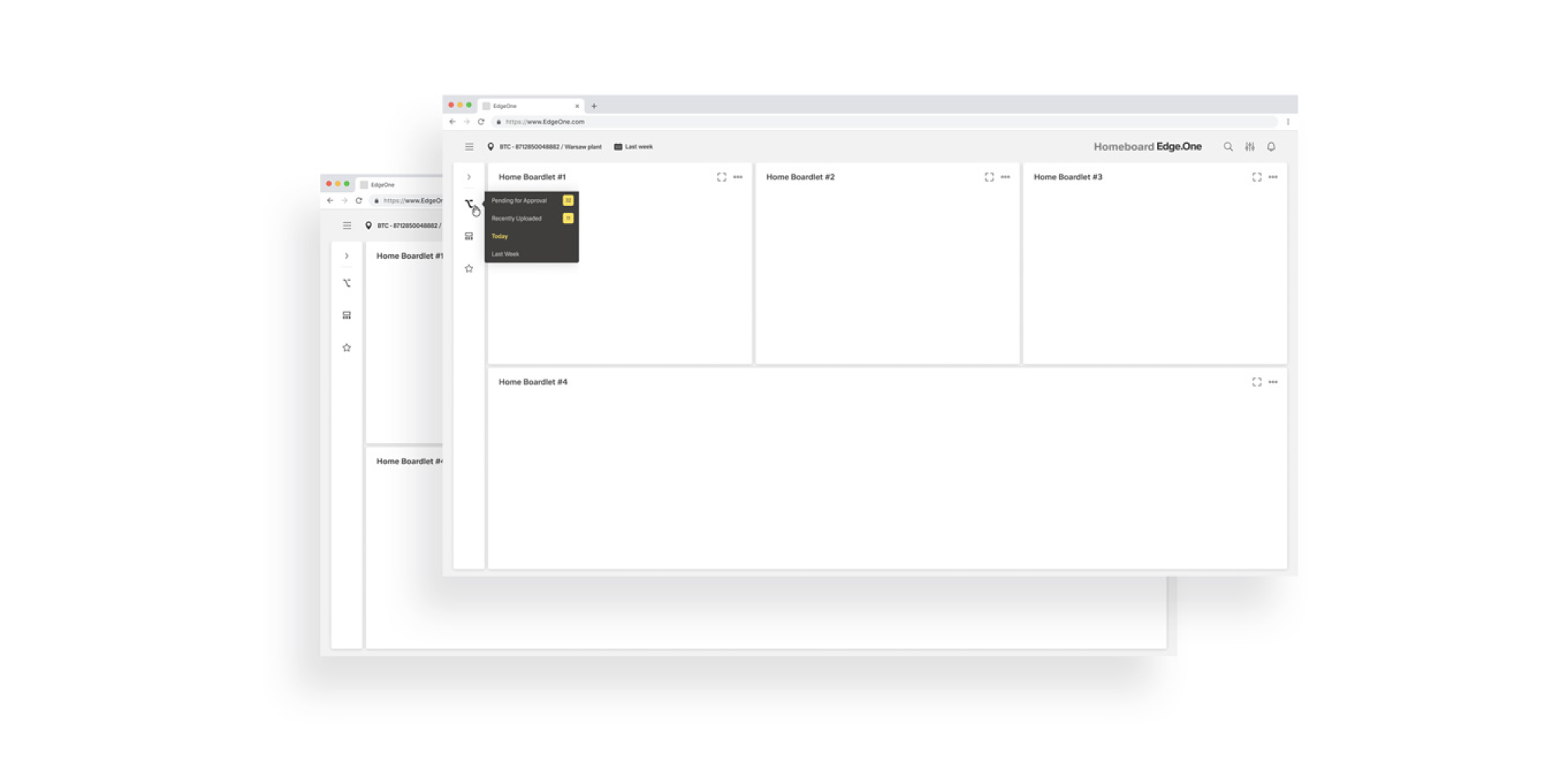
Local Navigation
Local navigation does not need to be everywhere in the Edge.One UI. Simple applications do not require local navigation. As soon as a dashboard requires e.g. nodes, dependencies, favorites or subdashboards, this must be placed in the local navigation. The local navigation always controls only the current dashboard and can vary from dashboard to dashboard.
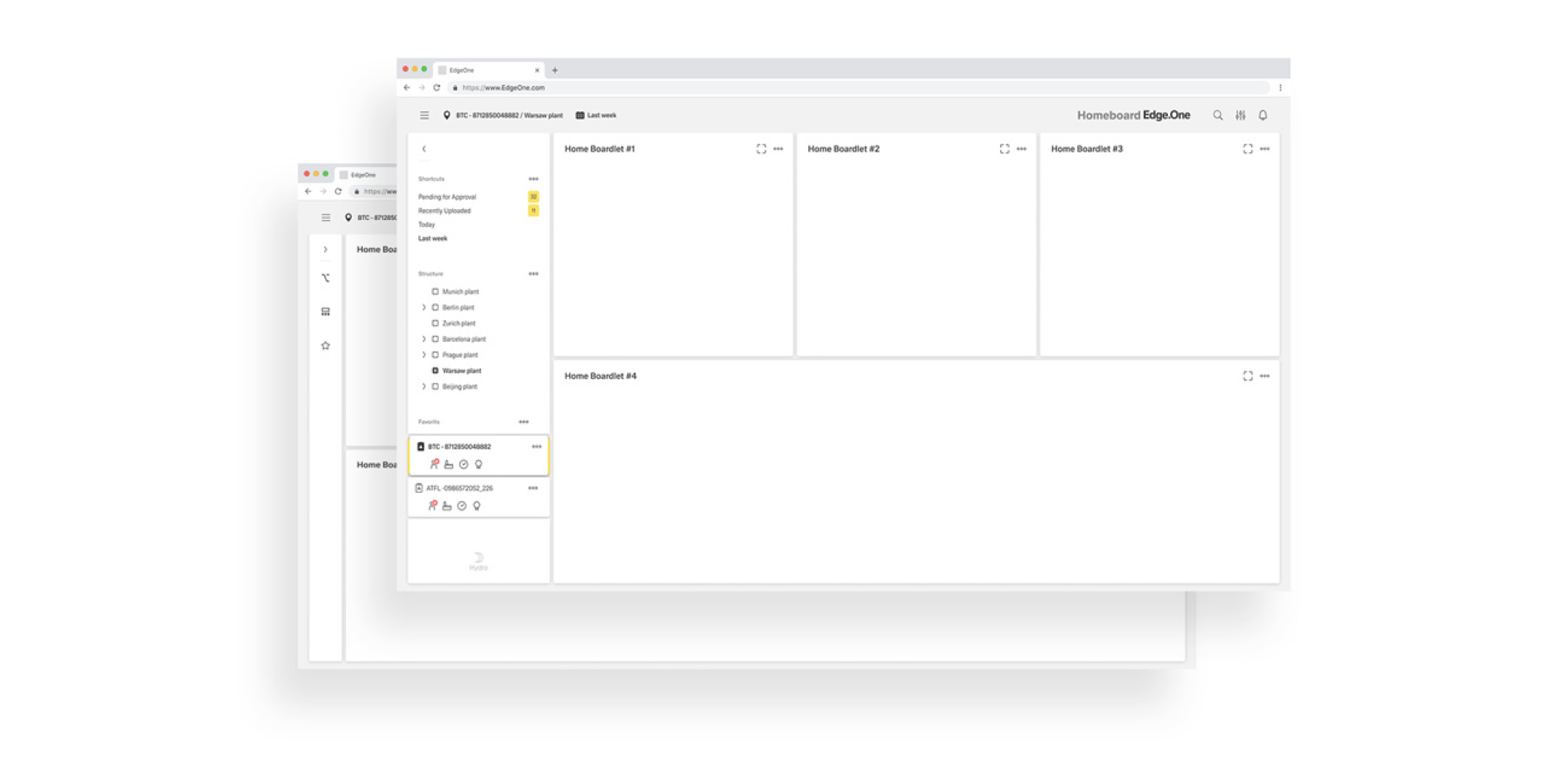
The dashboard navigation boardlet has two display options, Collapsed and Extended. This is necessary to keep the focus on the content of the dashboard. Shape and presentation within a breakpoint are always the same and must not be changed.
| Element | Usage |
|---|---|
| Collapsed Dashboard
Navigation Boardlet | The Collapsed Dashboard Navigation Boardlet is the compressed representation of the local navigation. All navigation contents are displayed to the user via action icons with the corresponding overflow menu. |
| Extended Dashboard
Navigation Boardlet | The Extended Dashboard Navigation Boardlet is the detailed representation of the local navigation. The user is presented with all navigation content via four different navigation assets. A link list, node list, map list or conflict list. The number and arrangement of the assets can be freely varied. |
Collapsed Dashboard Navigation Boardlet
The Collapsed Dashboard Navigation Boardlet always has the same proportions and is located on the left side of the dashboard. The content can vary from dashboard to dashboard and is represented by an action icon. The action icon opens an overflow menu where all thematic actions are listed. In case the customer wants to place his logo inside Edge.One this is only possible in the navigation boardlet.
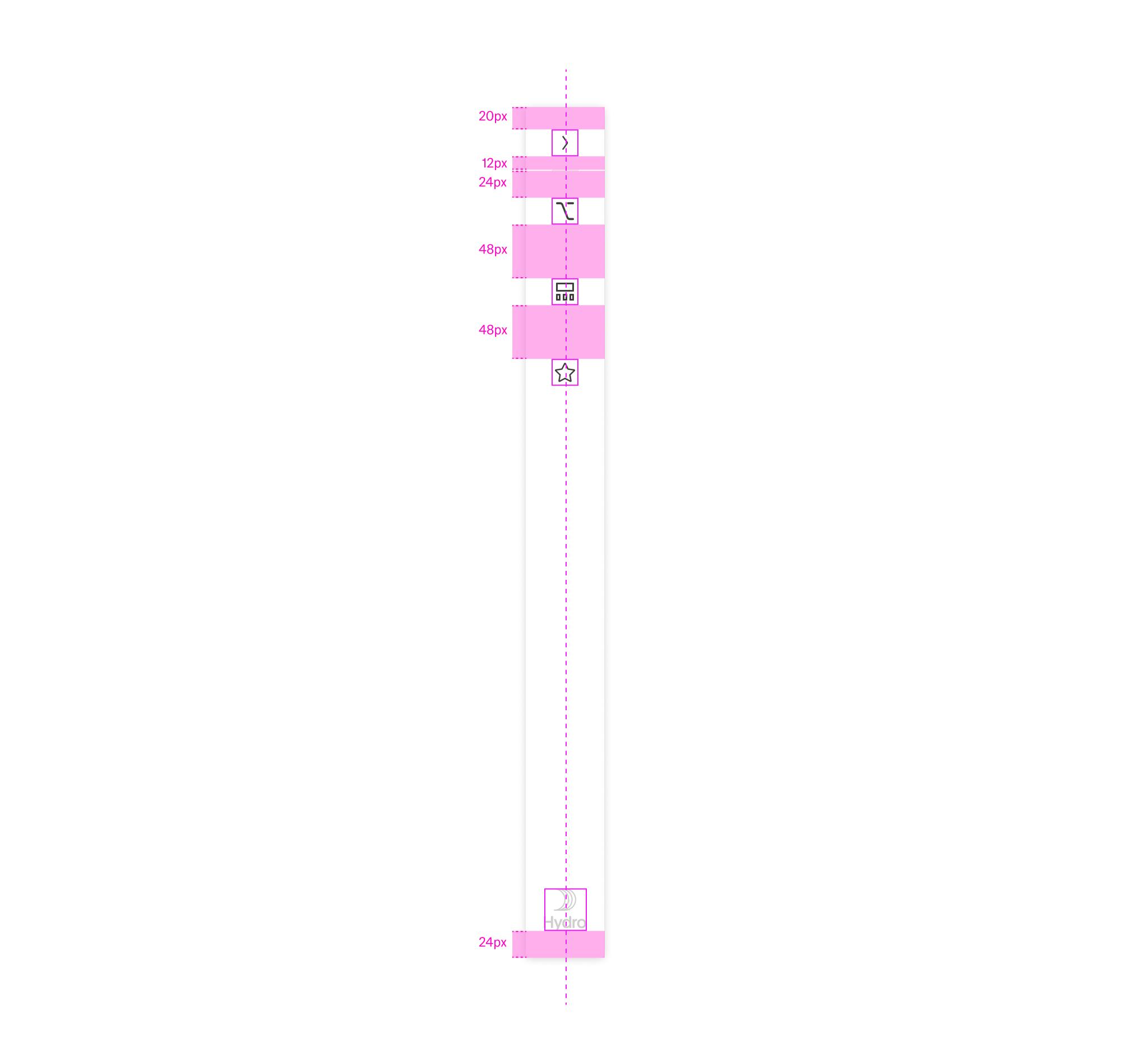
Collapsed Navigation Boardlet - Anatomy
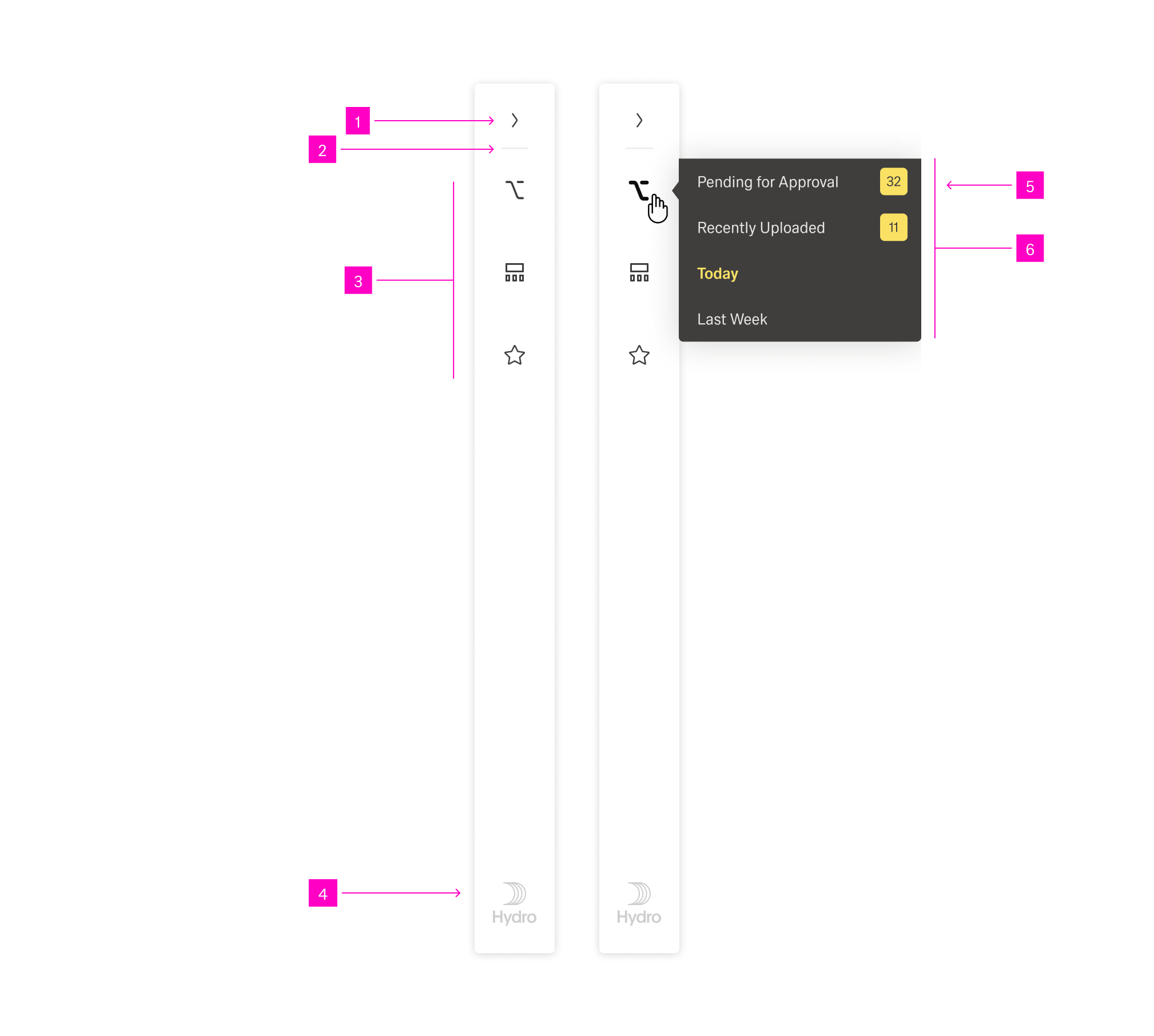
01 – Extender The Action Icon for extend Aand collapse the navigation boardlet.
02 – Divider A divider helps the user to differentiate between several action icons that have a different content and function.
03 – Content Actions These actions are variable and can be selected by the user/creator.
04 – Client Logo In case the customer wants his own logo, it will be placed only here.
Only signets or rectangular logos are allowed
05 – Overflow Action Link The number of links and the content of the link are variable.
06 – Overflow Menu The overflow menu contains all thematic actions. It opens only to the right.
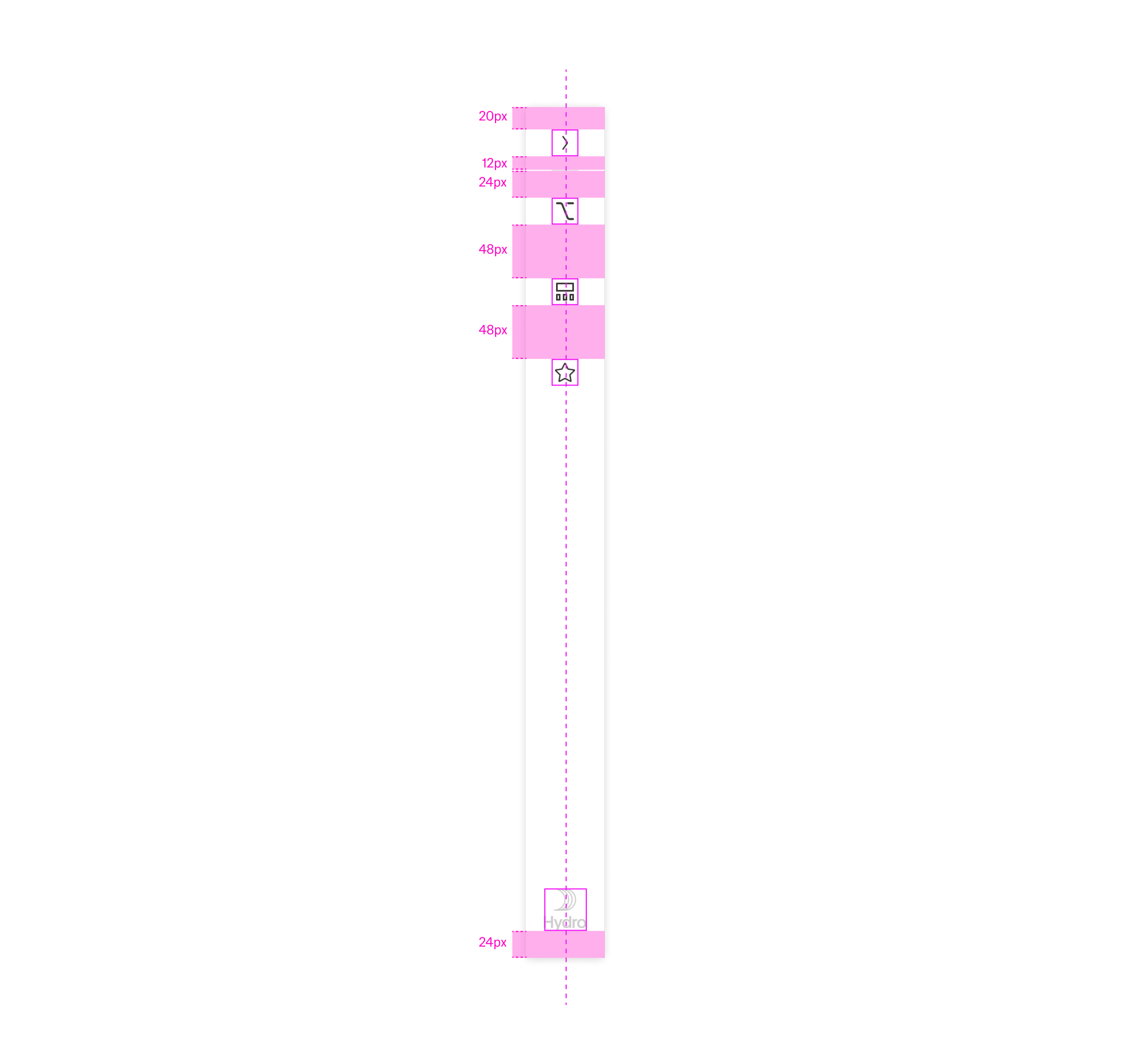
Collapsed Navigation Boardlet - Alignment
Extended Dashboard Navigation Boardlet
The Extended Dashboard Navigation Boardlet always has the same proportions and is located on the left side of the dashboard. The content can vary from dashboard to dashboard and is represented by a Navigation Asset. Currently there are four different navigation assets. A link list, node list, map list or conflict list. The number and arrangement of the assets can be varied freely. However, we recommend not to use more than three navigation assets in combination, otherwise space problems may occur.
In case the customer wants to place his logo inside Edge.One this is only possible in the navigation boardlet.
Collapsed and Extended Navigation Boardlet
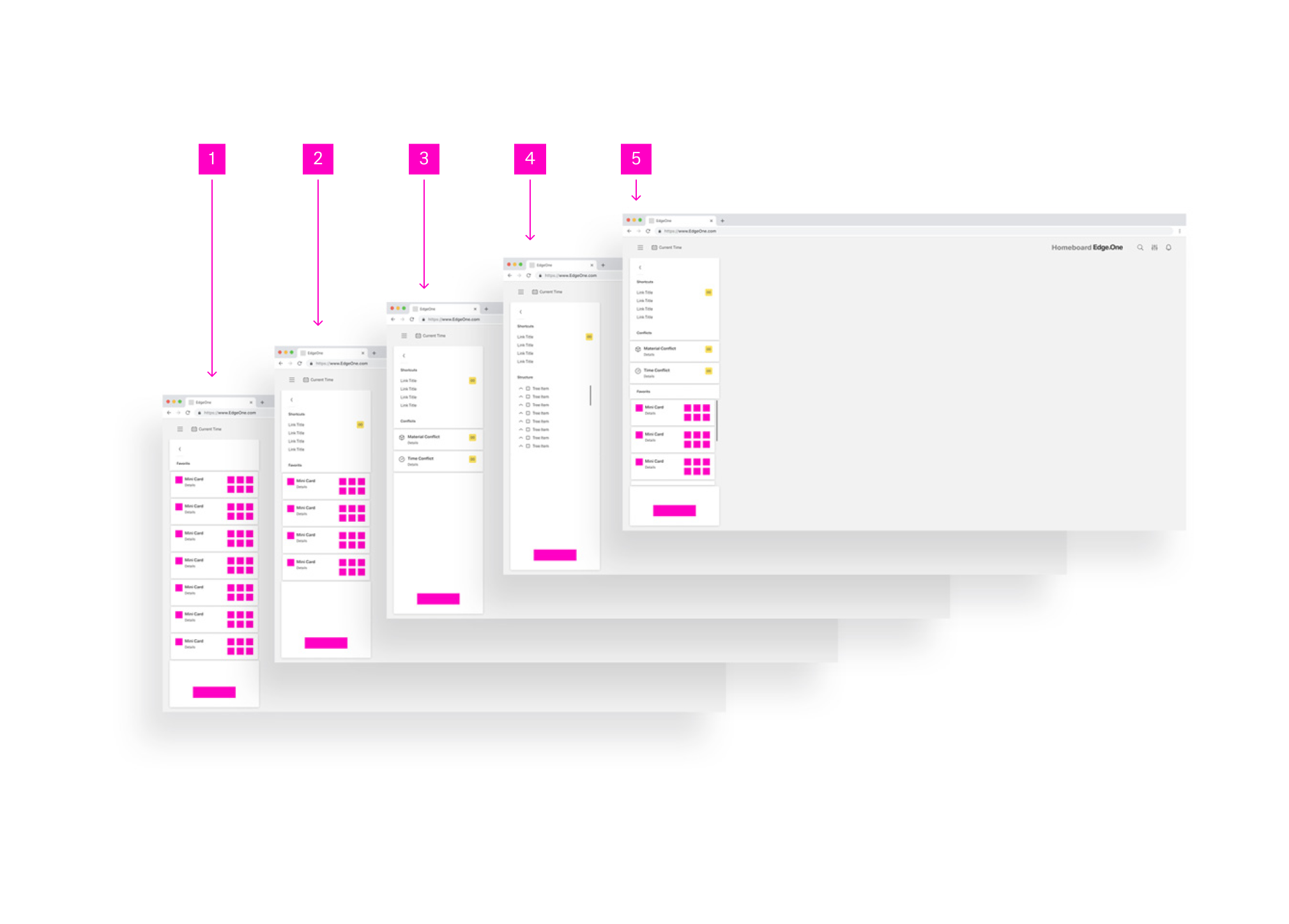
01 – Navigation Boardlet with only one Navigation Asset As an example, here you can see a card-list.
02 – Navigation Boardlet with two Navigation Assets As an example you can see here a combination
of card-list with a link-list.
03 – Navigation Boardlet with two Navigation Assets As an example you can see here a combination
of conflict-list with a link-list.
04 – Navigation Boardlet with two Navigation Assets As an example you can see here a combination
of node-list with a link-list
05 – Navigation Boardlet with three Navigation Assets As an example you can see here a combination
of card-List with a link-list and a onflict-list.
| Navigation Asset | Usage |
|---|---|
| Link List | A link-list always consists of a scrollable collection of links. The user can use this list to move faster in the content or to display favorite data with one click. |
| Node List | A node-list always consists of a scrollable collection of notes. The user can move back and forth through this list within the different nodes |
| Card List | A card-list always consists of a scrollable collection of minicards. The minicards can give the user detailed information about the underlying content. The user can move within the contents or data of the dashboard with the use of this list. You can find detailed information about the cards here. |
| Conflicts List | A conflict-list always consists of a scrollable collection of conflict-cards. The number of conflicts can be vary. The user can use this list as an overview and to filter conflicts in their dashboard. |
Collapsed Navigation Boardlet Anatomy
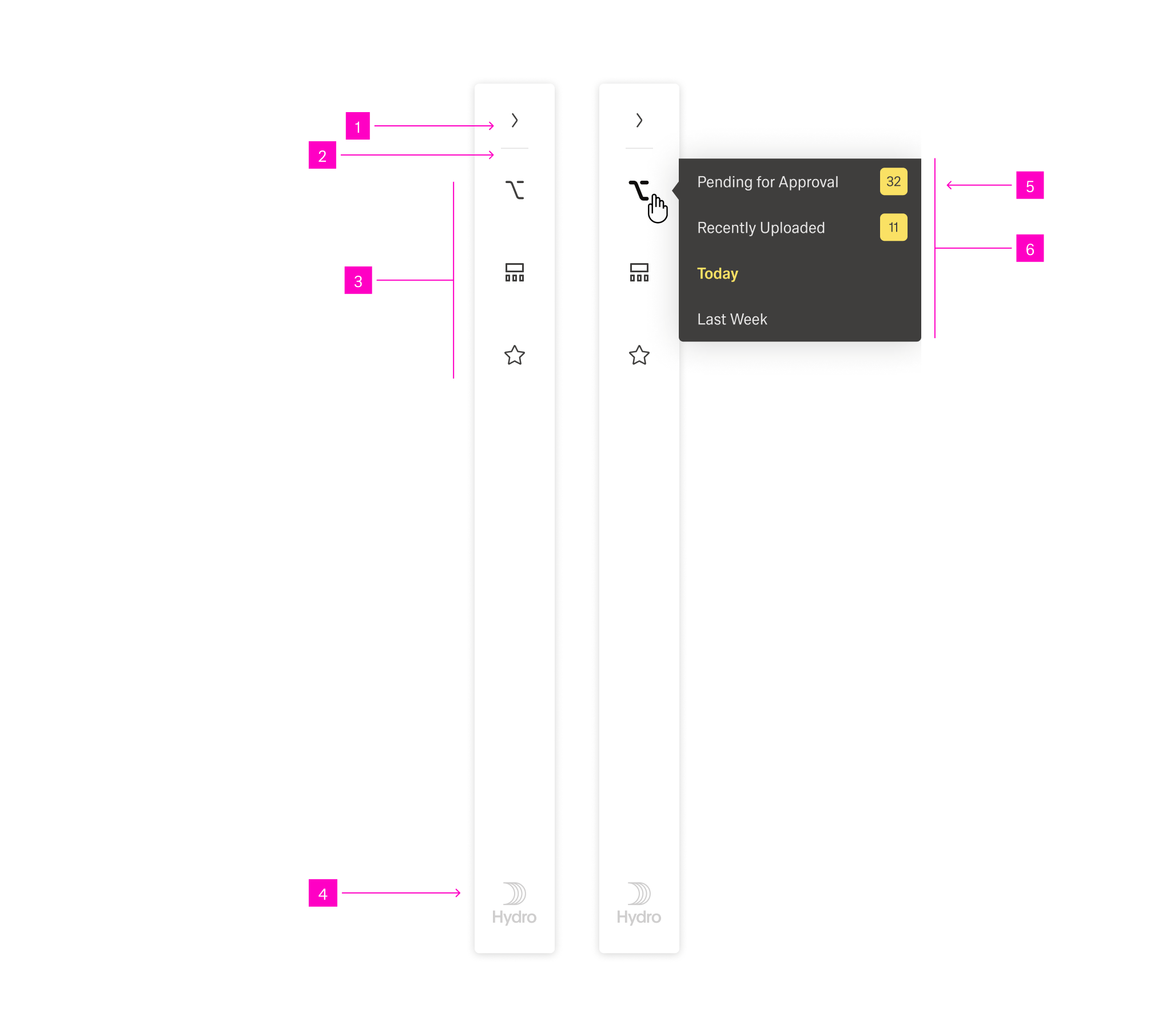
01 – Extender The Action Icon for extend and collapse the navigation boardlet.
02 – Divider A divider helps the user to differentiate between several action icons that have a different content and function.
03 – Content Actions These actions are variable and can be selected by the user/creator.
04 – Client Logo In case the customer wants his own logo, it will be placed only here.
Only signets or rectangular logos are allowed
05 – Overflow Action Link The number of links and the content of the link are variable.
06 – Overflow Menu The overflow menu contains all thematic actions. It opens only to the right.
Collapsed Navigation Boardlet Alignment