Work Management - Key Concepts
This article explains the core elements of Work Management in Finito, focusing on how work items are grouped, assigned, and controlled through roles and work item types.
Work Item Collection
A Work Item Collection is the central container that groups together all work items belonging to a specific functional context.
It defines:
Which roles can see or interact with the work items
Which work item types are available
Which recipients can be assigned work items
In practice, a Work Item Collection serves as the organizational unit for task management inside a shiftbook.
Example
A collection called “Maintenance orders” could group all maintenance-related tasks, approvals, and instructions for an operations or maintenance team.
Shiftbook Type: TaskBook V2
A shiftbook with the type TaskBookV2 is designed specifically for handling tasks and task-related processes.
Characteristics:
Supports structured creation, editing, and tracking of tasks
Allows the definition of task-specific permissions for each role
Provides advanced actions such as closing, approving, or copying work items
Integrates with shift-based workflows in Finito
This makes TaskBookV2 ideal for operational task management (e.g., maintenance tasks, safety instructions, audits).
Roles
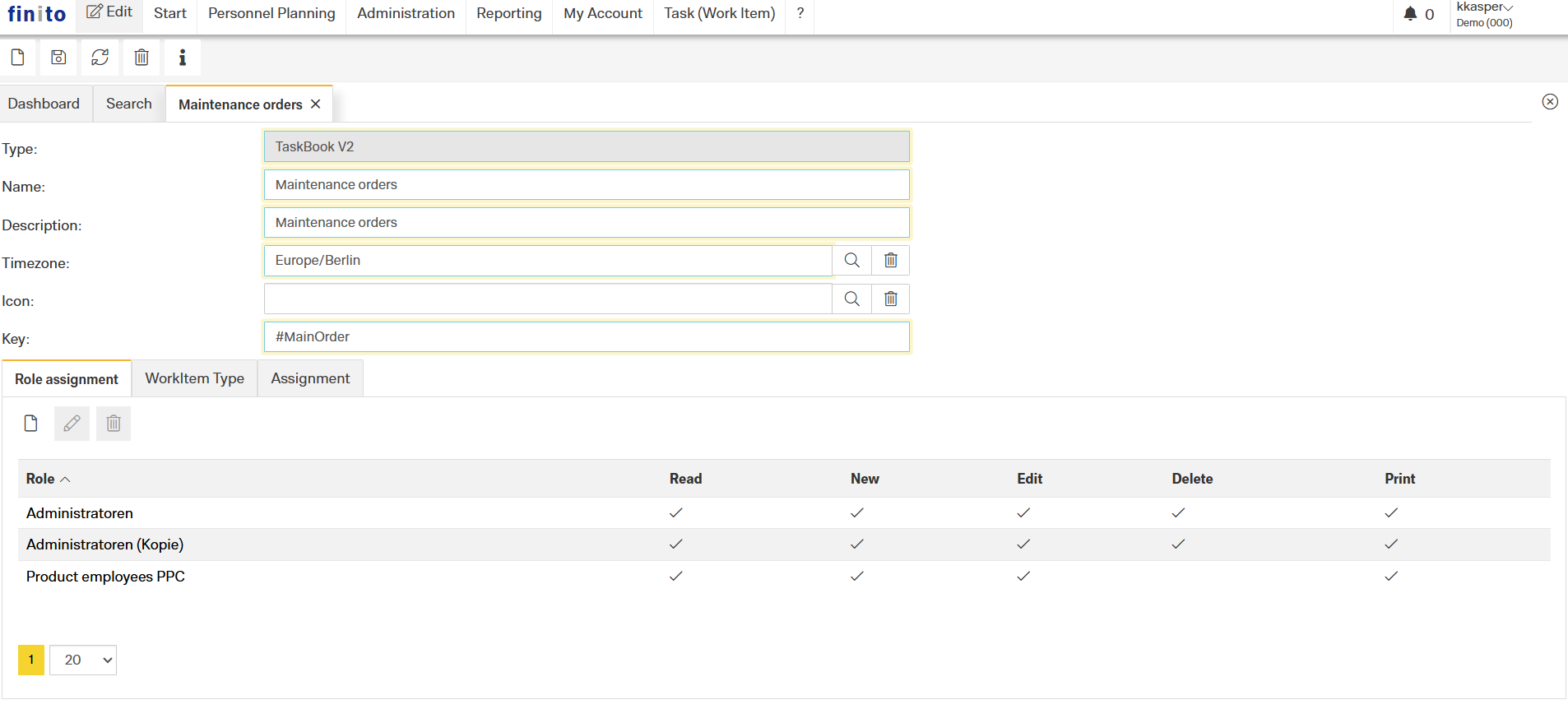
Roles determine who is allowed to do what within a Work Item Collection.
A role defines:
Visibility (Read)
Ability to create new work items (New)
Ability to modify them (Edit)
Permission to delete or print them (Delete, Print)
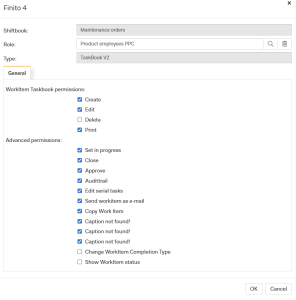
Advanced permissions such as closing, approving, or editing serial tasks
Examples of roles:
Administrators – full access to all functions
Product employees PPC – limited access, e.g., create and edit but not delete
Roles help ensure that only authorized users can interact with specific work items.
Work Item Type
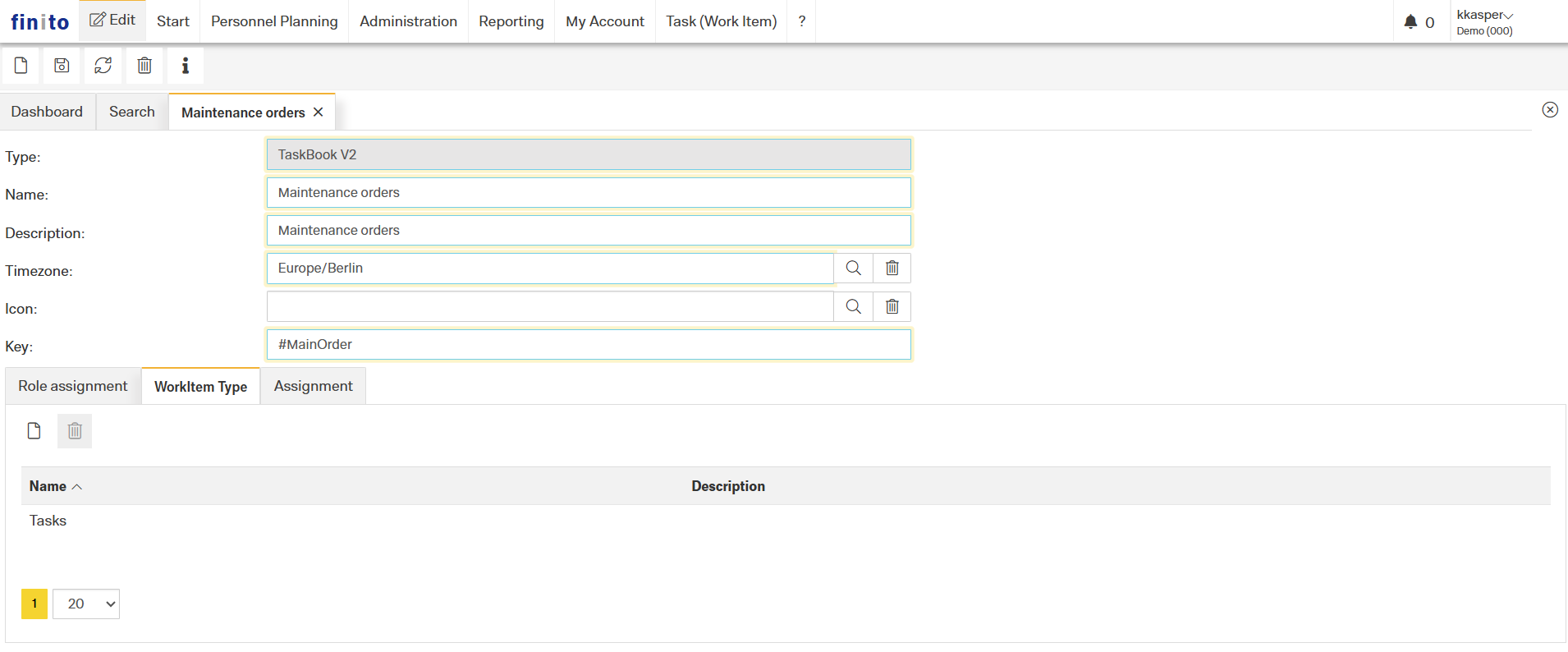
A Work Item Type defines the kind of tasks or actions that can exist within a collection.
Typical types include:
Tasks – general work instructions
Instructions – safety instructions with read-state
Audits – checklists or audit procedures
Assigning a type to a collection determines which types of activities are available to its users.
Assignment
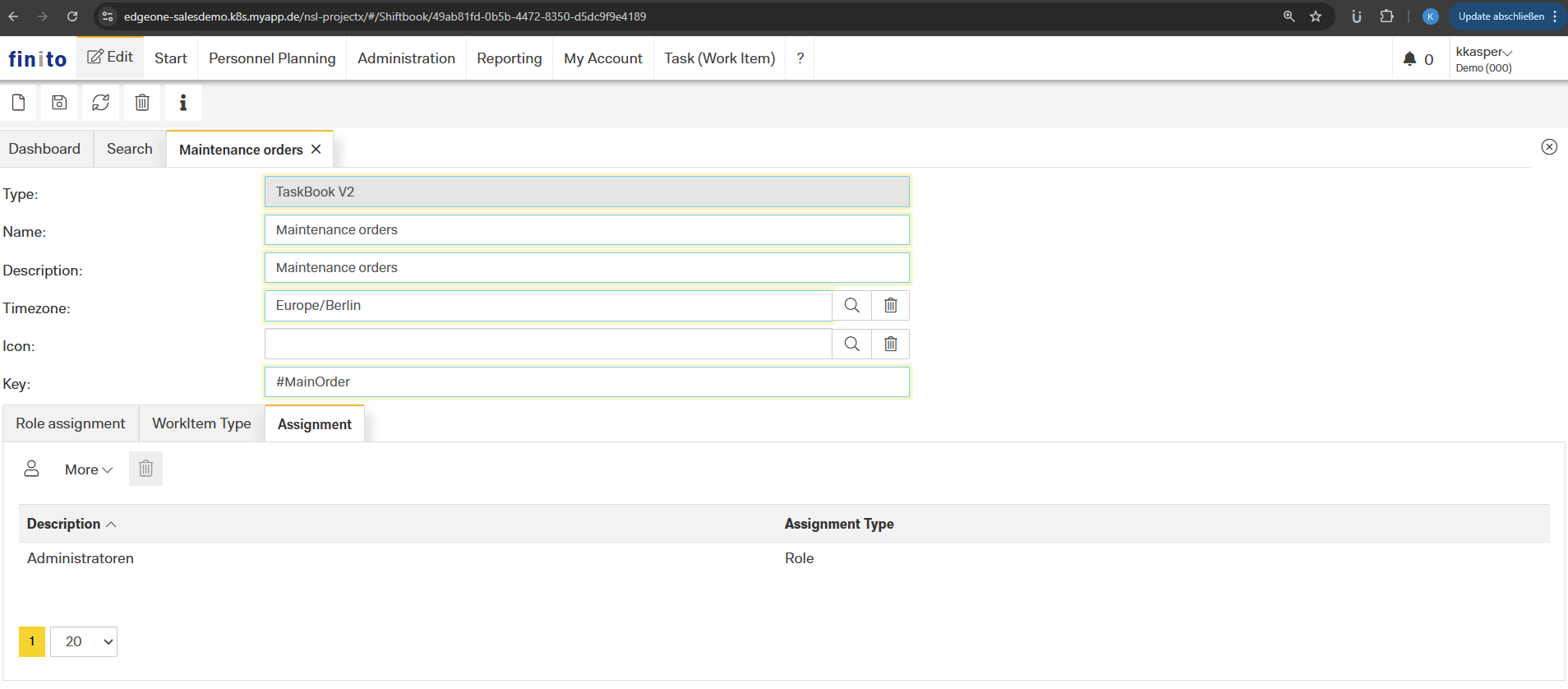
Assignments define who can receive work items.
Any entity that can act as a “recipient” for a task can be configured as an assignment target.
Possible assignees include:
Individual employees
Roles
External service providers
Other shiftbooks
Specific shifts or teams
This enables flexible routing of tasks to the correct responsible person or organizational unit.
Example
If a maintenance task needs to be assigned to the night shift, the night shift object can be selected directly as the assignment target.